

Before children can invent something new, they need time to notice what already exists.
A child turns over a stone and discovers a tiny world underneath. Another watches water change direction when a stick is placed in a stream. A third tries to build a bridge from branches, sees it collapse, and quietly begins again. These moments may look like ordinary play, but they contain the first steps of innovation: observation, curiosity, experimentation, and revision.
In an age when digital tools can deliver an answer in seconds, children still need experiences that teach them how to find a worthwhile question. Exploration gives them that foundation. It helps children move beyond consuming information and begin investigating how the world works.

Quick answer: Exploration is the foundation of innovation because it helps children notice patterns, ask original questions, test possibilities, learn from feedback, and connect ideas across different experiences. Innovation is not a sudden flash of genius; it is often the result of sustained curiosity.
Exploration Comes Before Innovation
Innovation is sometimes presented as the ability to produce a brilliant idea. For children, however, the process begins much earlier. They first need opportunities to touch, move, compare, combine, take apart, and observe.
When a child explores freely, the goal is not to reach one predetermined answer. The child is building a mental library of experiences: what rolls, what bends, what balances, what absorbs water, what makes a sound, and what changes when one variable is altered. Later, these concrete experiences become raw material for creative problem-solving.
This is why hands-on exploration matters even in a highly digital world. Artificial intelligence can generate possibilities from existing data, but a child must still learn to recognize needs, frame problems, and decide which possibilities are meaningful.
The Exploration-to-Innovation Cycle
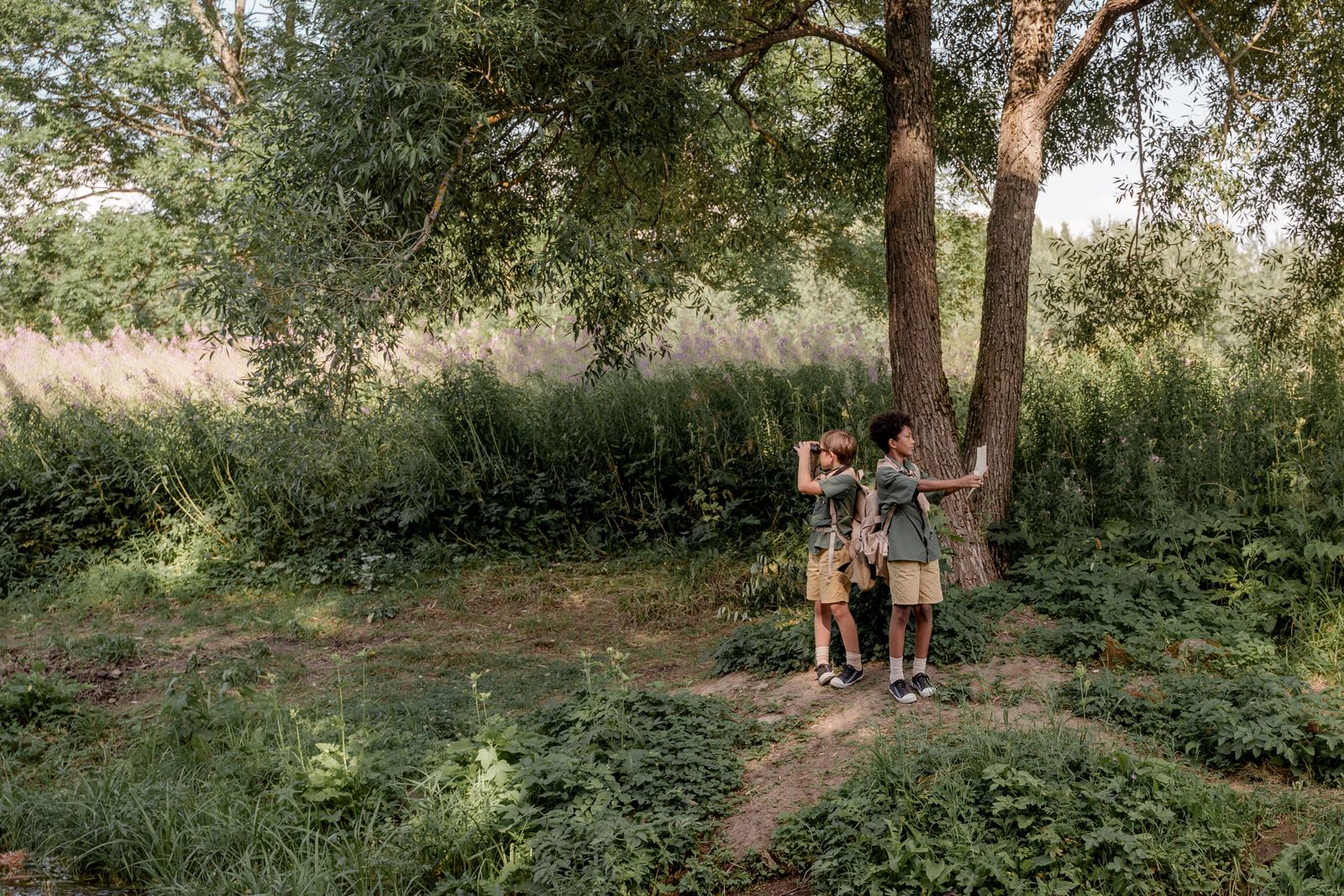
Children rarely follow innovation as a neat, linear sequence. Still, their learning often moves through a recognizable cycle:
- Notice: “This piece keeps falling.”
- Wonder: “What would make it stay?”
- Try: The child changes the base, material, or angle.
- Observe: The new version behaves differently.
- Revise: The child keeps, rejects, or combines ideas.
- Explain: The child describes what happened and why.
Every loop strengthens more than subject knowledge. Children practice attention, flexible thinking, persistence, causal reasoning, and communication. These are transferable abilities that support science, engineering, art, design, and everyday decision-making.
What Research Says About Playful Exploration
The American Academy of Pediatrics describes play as a developmentally important context for strengthening cognitive, language, social-emotional, and self-regulation skills. Its clinical report also emphasizes that playful learning supports executive functioning and the capacity to pursue goals. In other words, exploration is not a break from serious learning; it is one of childhood’s most natural learning systems.
Research on guided play adds an important nuance. Children benefit from freedom to investigate, while adults can enrich the experience by preparing an interesting environment, introducing useful vocabulary, and asking open questions. The adult does not need to control the outcome. A small prompt—“What do you notice?” or “What else could you try?”—can keep ownership with the child while extending the thinking.
Research references: American Academy of Pediatrics, The Power of Play; Harvard Center on the Developing Child, Executive Function.
Why Exploration Matters More in the AI Era
AI is increasingly good at summarizing known information and generating polished responses. That makes distinctly human judgment more valuable, not less. Children will need to decide which problems deserve attention, recognize when an answer does not fit reality, and imagine alternatives grounded in human needs.
Exploration develops those abilities because reality provides honest feedback. A tower either balances or it does not. A paper boat floats, tilts, or sinks. A seed grows differently depending on light and water. The child cannot simply accept a confident explanation; the child can test it against the physical world.
That habit—observe, question, verify—is also a healthy foundation for using AI responsibly. A child who has learned to investigate is more likely to treat an AI response as a starting hypothesis rather than an unquestionable conclusion.
PINOER’s Principle: Experience Before Explanation
Let the child encounter the problem before giving the lesson.
When adults explain too early, children may remember the answer without developing the thinking that produces it. Offer safe materials, enough time, and a meaningful challenge. Let experience create the need for explanation.
This does not mean leaving children without support. It means choosing support that protects agency. Instead of showing a finished model, provide varied materials. Instead of correcting the first attempt, ask what the child expected. Instead of praising only success, notice careful observation and useful changes.
How Parents Can Create More Room for Exploration
1. Offer materials with more than one possible use
Blocks, cardboard, tubes, stones, fabric, water, sand, clay, gears, and simple loose parts invite children to decide what the materials could become. Open-ended materials support more experimentation than an activity with only one correct result.
2. Replace instructions with invitations
Try prompts such as:
- “What do you think will happen?”
- “What changed when you moved that piece?”
- “Can you find another way?”
- “What would you like to test next?”
- “How could you show me what you discovered?”
These questions encourage prediction and reflection without taking control of the experience.
3. Protect uninterrupted time
Deep exploration rarely fits into five hurried minutes. Children need enough time to become absorbed, encounter difficulty, and return to the problem. Not every afternoon must be tightly scheduled. A slower block of screen-free time can create conditions for more sustained thinking.
4. Let small failures remain visible
When a structure collapses, resist rebuilding it immediately. Ask the child what the collapse revealed. Failure becomes useful when it provides information for the next attempt.
5. Connect experiences across settings
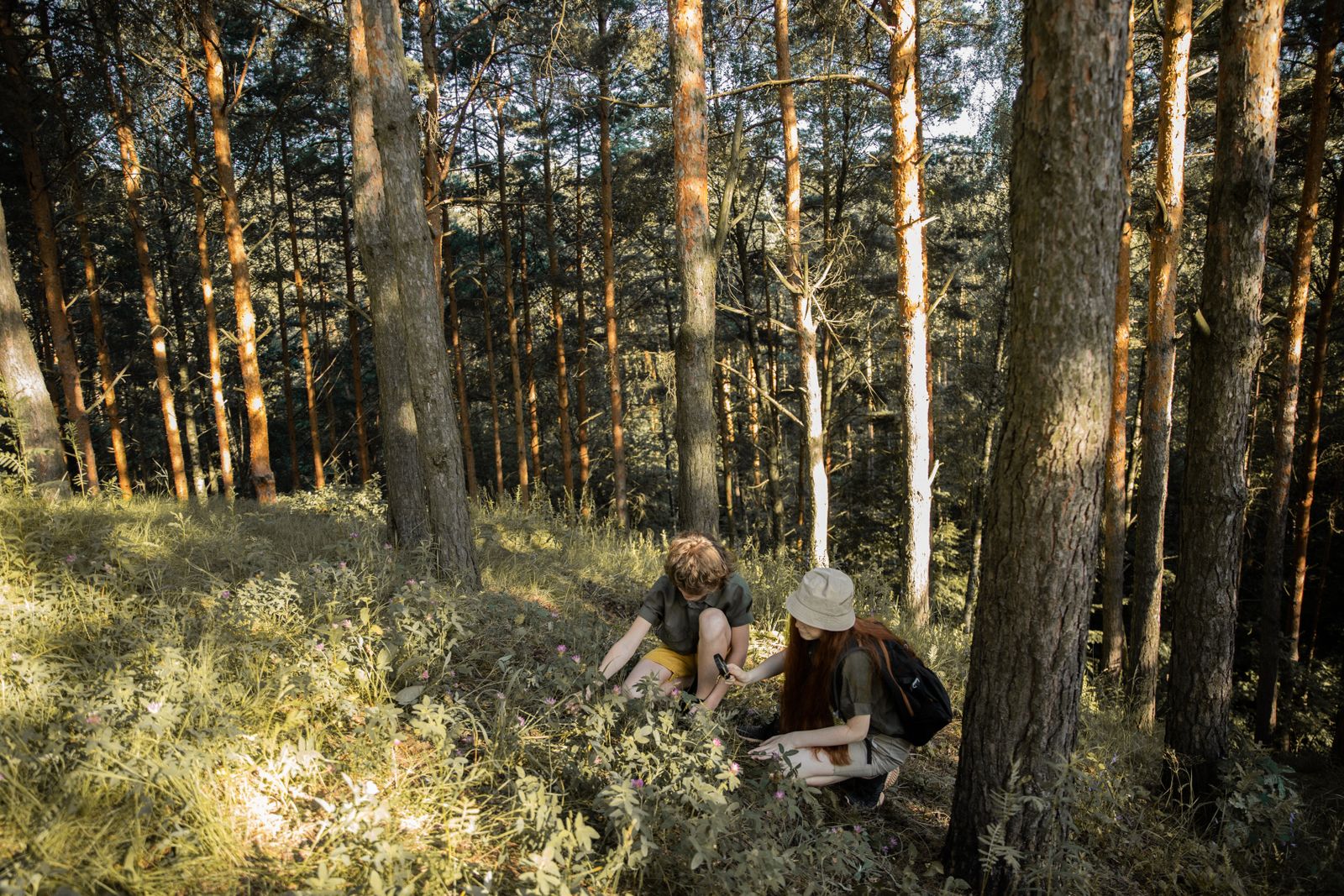
A pattern discovered in leaves can inspire a building design. A stream can lead to questions about channels and bridges. A broken toy can prompt an investigation of joints and motion. Innovation often comes from connecting ideas that first appeared unrelated.
A Simple Family Exploration Activity: The Found-Object Design Lab
Recommended for: ages 5–10, with age-appropriate supervision.
You will need: a small collection of safe natural or recycled materials, paper, tape or child-safe connectors, and a flat work surface.
- Take a short walk and collect a few safe objects such as fallen leaves, twigs, seed pods, or smooth stones. Leave living plants undisturbed.
- Ask your child to sort the objects in any way that makes sense to them.
- Invite the child to choose a problem: build a tiny shelter, make a bridge across a gap, create a tool for moving a small object, or invent something entirely different.
- Before building, ask for one prediction: “Which material will be most useful, and why?”
- Let the child build, test, and revise without a model to copy.
- Finish with three questions: “What surprised you? What did you change? What would you try tomorrow?”
Use AI After the Real-World Investigation
AI can extend exploration when it follows—not replaces—direct experience. After the child has completed the activity, try this sequence:
- Have the child describe the design and the evidence they observed.
- Ask an AI tool for three questions a scientist or engineer might ask about the design.
- Let the child choose one question and test it physically.
- Compare the AI suggestion with what actually happened.
This keeps the child in the role of investigator. AI contributes prompts, while the physical world remains the source of evidence.
Key Takeaways
- Exploration supplies the observations and experiences from which original ideas grow.
- Children build innovative thinking through repeated cycles of noticing, questioning, testing, and revising.
- Open-ended materials and unhurried time encourage deeper investigation.
- Parents support exploration best by asking useful questions without taking ownership away from the child.
- In the AI era, real-world testing helps children verify information and develop independent judgment.
Frequently Asked Questions
What is exploratory play?
Exploratory play is child-led investigation through touching, moving, combining, observing, and testing materials or environments. The emphasis is on discovery rather than producing one predetermined result.
How does exploration support creativity?
Exploration exposes children to patterns, properties, problems, and unexpected results. Those experiences give them more ideas to connect and transform when they create something new.
Is guided play still child-led?
It can be. In effective guided play, the adult prepares the environment or asks open questions, but the child makes meaningful choices and leads the investigation.
What are the best toys for exploratory learning?
Look for durable, open-ended materials that can be used in multiple ways, encourage physical manipulation, and allow children to test their own ideas. Blocks, construction systems, loose parts, sensory materials, and simple mechanisms are strong examples.
How can exploration help children prepare for an AI-driven future?
It strengthens observation, question formation, causal reasoning, persistence, and evidence-based judgment—abilities children need to evaluate AI outputs and develop solutions grounded in real human experience.
Exploration Is Where Possibility Begins
Children do not become innovators by memorizing the largest number of answers. They become innovators by learning to pay attention, remain curious, test their thinking, and keep working when the first idea fails.
The next time your child pauses beside a puddle, dismantles a structure, or collects a pocketful of ordinary objects, try not to rush the moment. Exploration may look small from the outside, but inside the child’s mind, the foundations of future invention are being built.
Give Curiosity Something Real to Work With
Explore hands-on, screen-free play designed to help children observe, test, build, and discover through experience.
Explore the Explorers Collection


